

“We needed a consistent and digital data foundation that could be used broadly — both internally and in collaboration with external consultants and contractors.
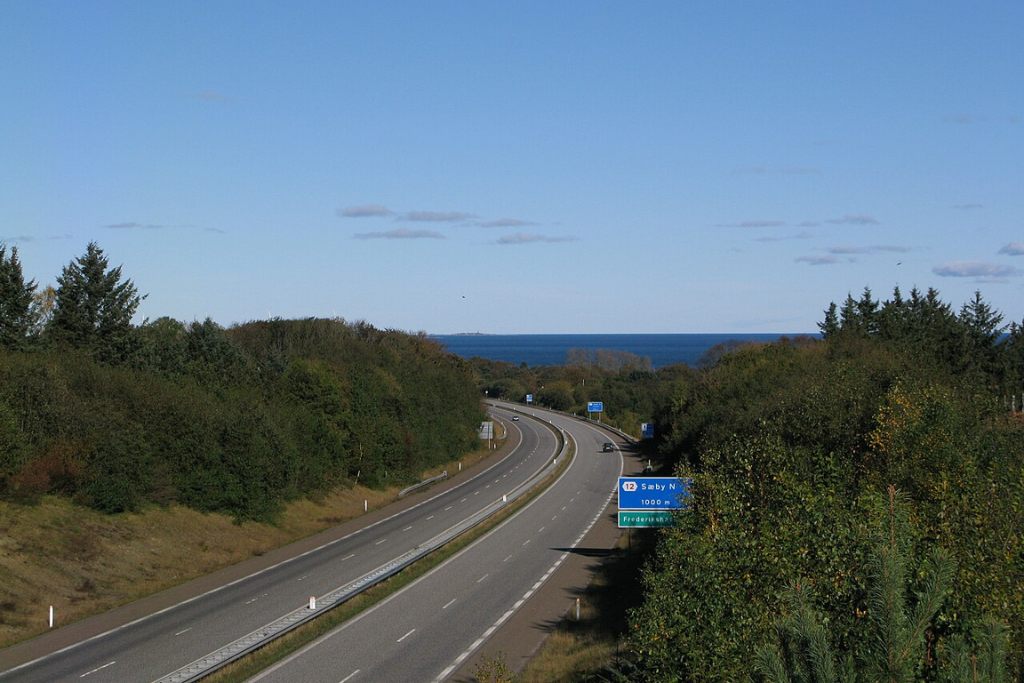
Along Denmark’s state roads, thousands of trees and shrubs form part of the infrastructure — but also of the landscape, biodiversity and day-to-day maintenance.
For several years, the Danish Road Directorate has worked with vegetation along approximately 3,800 km of state roads. The ambition has been clear: to establish one shared, consistent and digital datafoundation that can be used across the organisation and in collaboration with external consultants and contractors.
This is the background for the collaboration between The Danish Road Directorate and Forsler.
Previously, data on vegetation and invasive species was spread across different systems and formats. This made it difficult to connect operations, projects and tender processes — and to ensure that everyone worked from the same updated foundation.
As Martin Hostrup, Project Manager for Operations and Maintenance at The Danish Road Directorate explains:
“We needed a consistent and digital data foundation that could be usedbroadly — both internally and in collaboration with external consultants andcontractors.”
The goal was not only to collect data in one place, but to make it operational and useful in practice.
Rather than developing a custom-built solution, the Danish Road Directorate chose to enter into a framework agreement with Forsler.
Forsler functions as a shared platform where vegetation and invasive species are registered, structured and made available in a consistent format.
The solution combines Forslers digital registration tools with existing data sources. The result is a consistent and scalable data foundation that can be continuously updated and used across a wide range of tasks.
The collaboration has included, among other things:
Today, the digital data foundation is used in a number of ways by the Danish Road Directorate:
The shared digital overview makes it easier to make decisions and ensures better alignment between operations, planning and execution.
The result is one shared, digital and easily accessible overview of vegetation and invasive species along the state roads.
This creates more efficient workflows, better documentation and a stronger foundation for collaboration — both internally within the organisation and with external stakeholders.
At Forsler, we see the collaboration as an example of how a shared digital foundation can support critical infrastructure. When data is structured, updated and easy to share, it becomes possible to work more holistically with operations, nature considerations and long-term planning.
The need for documentation, overview and coordination is growing — especially in organisations that manage large areas and work with many stakeholders.
The experience from the collaboration with the Danish Road Directorate shows that a shared digital foundation can be an effective tool for creating alignment and transparency in complex tasks.
For us, the collaboration is an important step towards making data more useful in practice — and a strong example of how digital tools can support both professional expertise and collaboration in day-to-day management.

